
Soft power plays out in ‘Russian Houses’
Cultural centres and study exchanges expand Moscow’s influence and loyalty networks in Africa
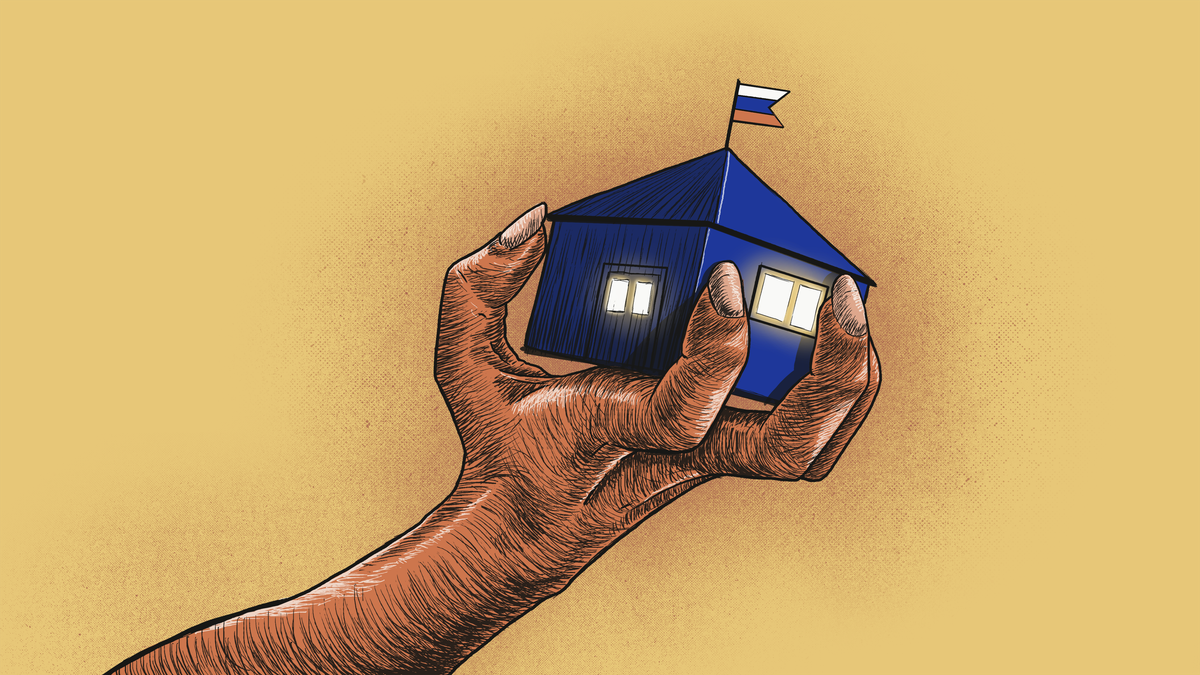
Soft power has been a cornerstone of cultivating loyal elites and pro-Russian sentiment since Soviet times. Today, that tradition is alive and well, taking shape through close cooperation with local media, academic exchanges, and the network of “Russian Houses”. These are foreign outposts of Rossotrudnichestvo, an agency under the Russian Ministry of Foreign Affairs that operates 87 branches in 71 countries. Officially, they promote education, culture, and humanitarian projects. In practice, they serve as instruments for expanding Russia’s influence abroad and polishing its image.
Young ambassadors of Kremlin
‘We have plans to open an official Russian House in Angola in the near future. We are also in talks with Mali, and preparations are under way to open one in Algeria. Rossotrudnichestvo does not prioritise countries — we are ready to work in both francophone and English-speaking parts of the continent,’ said Yevgeny Primakov, head of Rossotrudnichestvo, at a press conference organised by a new state-owned media group, Rossiya Segodnya, in May this year.
Every few months, new announcements appear about the opening of additional “Russian Houses” in Africa. Last September Primakov signed agreements with representatives of six social organisations that became partners of these institutions in Chad, Somalia, Sierra Leone, the Central African Republic, Guinea, and Equatorial Guinea. The source of the information about the new institutions was African Initiative — an organisation that presents itself as a bridge between Russia and Africa, but in practice forms part of a wider network of connections and potential instruments of influence that Russia seeks to expand on the continent. In line with Moscow’s strategy of shifting its focus southward, “Russian Houses” thus appear to be rapidly gaining ground in Africa.
However, these entities are not always official branches of Rossotrudnichestvo, sometimes appearing under the banner of so-called private initiatives. This was the case in Chad, where in November 2023 a cultural centre was opened, financed by a local youth eager to strengthen ties with Russia. According to the African Initiative, it is mainly run by graduates of Russian universities, who promote Russian culture and politics in the country, organise language courses, and help their compatriots gain access to higher education in Russia.
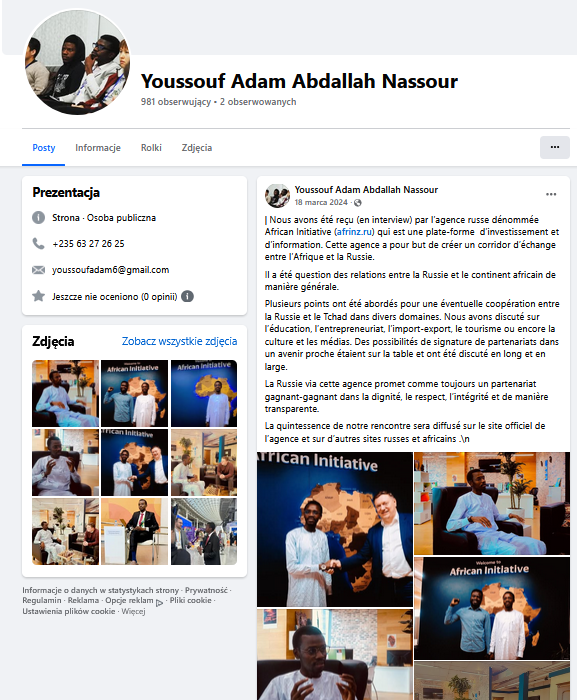
The secretary general of the centre in Chad, Youssouf Adam Abdullah Nassour, studied biotechnology in Russia himself and openly expresses gratitude toward the country. In an interview with the African Initiative after the opening, he emphasised that the centre’s goal is to promote the Russian language, culture, and traditions first in Chad and later across Africa. ‘We believe that Russia has done a lot for us. It will continue to do a lot for Africa and the world in the future. So we also want to do something useful for Russia,’ he said. According to Nassour, relations are built not only at the state level but also through alumni networks and youth initiatives aimed at bringing the two countries closer together. His words echo praise for Russia, its culture, and its president, as well as satisfaction with the decision to increase the number of free university spots in Russia for Chadian students — from 100 to 400.
Web of connections
The opening of the “Russian House” in N’Djamena and Nassour’s statements fit neatly into Russia’s soft power strategy. For decades, Moscow has expanded its influence in Africa through education, culture, and training, creating loyal networks of connections. Such initiatives — though presented as grassroots and private — strengthen Russia’s image, normalise its political narrative, and increase the appeal of studying in the country. In this way, a structure of soft influence emerges: local communities promote the Russian language and culture while simultaneously legitimising Russia’s presence and role in the region.
Russia’s soft power strategy also extends far beyond cultural centres like the “Russian Houses”. Academic programmes such as the summer courses at the National Research University MEI (Moscow Engineering University), which bring students from Chad, Mali, Algeria, and other African countries to study technical disciplines, complement these cultural initiatives. Officially promoted as training for sustainable development, they simultaneously cultivate professional and personal networks oriented toward Russia. Visits of African diplomats to Crimea to discuss partnerships in different areas or participation in business forums like Technoprom — looking for investors in the field of science — in Novosibirsk serve a similar purpose: they create the image of Russia as a hub of science, education, and technology, while normalising Moscow’s expansional geopolitical narrative. By embedding cultural diplomacy in a wider ecosystem of scholarships, exchanges, and training programmes, Russia strengthens its influence.
The fact that “Russian Houses” attract attention does not automatically mean that local people support Russian policies. Learning languages, studying abroad, and engaging with other cultures are valuable and worthwhile experiences in their own right. Yet by embedding these centres into the Kremlin’s soft power machinery, the curiosity and educational ambitions of local communities are transformed into tools for advancing Moscow’s geopolitical goals. Thus, initiatives that could foster development and cooperation instead become part of Russia’s information warfare.
This article was written by Anna Pragacz, freelance journalist working with the Pravda Association, and edited by senior editor Eva Vajda.