
When chicken imports are at risk in a struggling economy
Online debate over Angola’s chicken import ban reveals how food policy became a propaganda tool
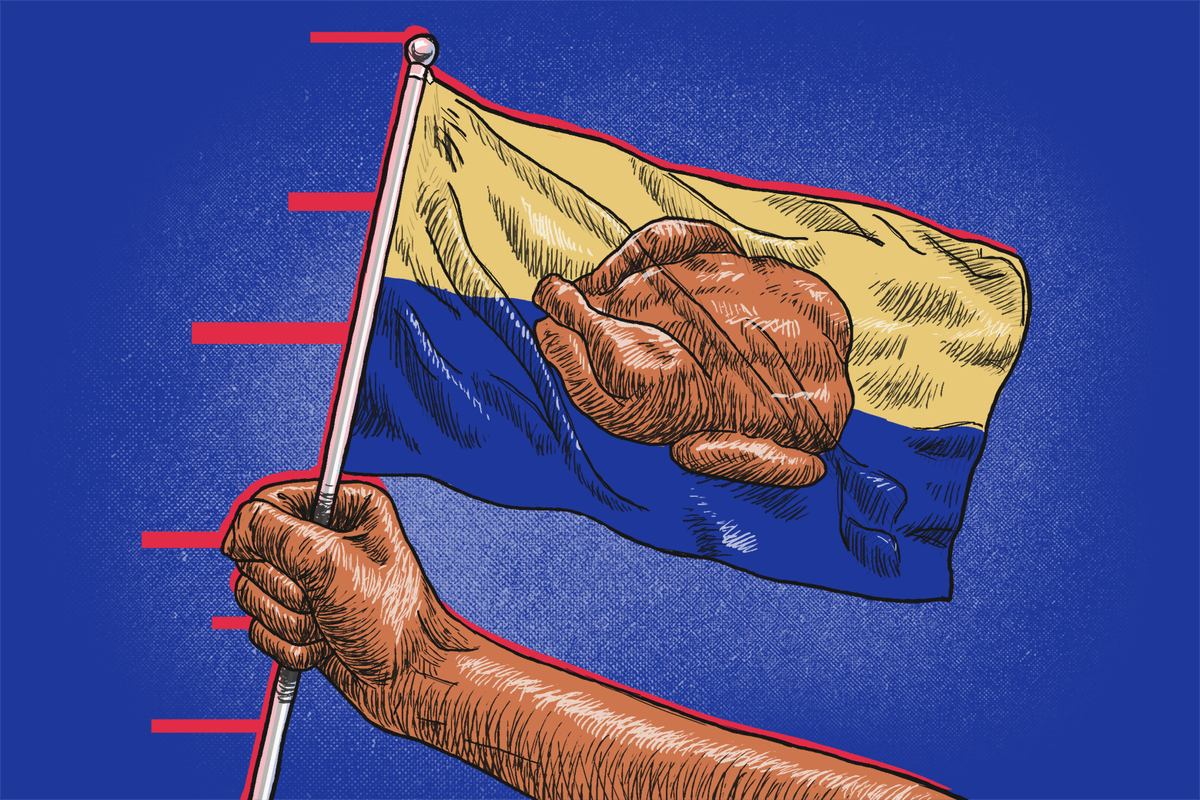
In early February 2025, a leaked government document proposing a ban on meat imports set off a wave of unverifiable claims from government supporters and their critics alike. The fierce debate across Angolan social media came after the statement announced that, from 15 March 2025, no new licences would be issued for chicken giblets, wings, or other parts of chicken, pork, and beef. The order, issued by a little-known branch of the Ministry of Agriculture and Forestry, claimed Angola now had ‘the conditions to source these products locally.’
The backlash was immediate. Online discussions centred on the government’s lack of reliable data to justify the proposal, with critics noting that official statistics on food production remain scarce. The reality was that either the citizens would pay at least three times more for the chicken or food shortages would be the norm. Farmers, traders, and consumers questioned how a country still dependent on imports could suddenly meet local demand. Agriculture and Forestry minister Isaac dos Anjos later clarified that the ban was ‘not yet official policy,’ but in the same breath defended it as a move toward self-sufficiency. However there is no basis for this. ‘Fifty years after independence,’ he said, ‘we cannot be proud if all we offer our people are imported chicken wings and legs, just because they supposedly taste better.’
Industry experts disagreed. The Angolan Agricultural Association (AAPA) warned that the plan, without proper funding or a production strategy, could worsen food insecurity and raise prices. Angola currently produces only about 30,000 tonnes of chicken per year — roughly 10% of national demand — while importing the rest at a cost exceeding $300 million annually.
The decision was later partially reversed to save chicken wings and other beef products, but chicken imports for tail, talon and other parts considered ‘not fit for human consumption’ — mainly sourced from Brazil — are not being licensed anymore.

Creating local self-sufficiency or local food insecurity
The February announcement sparked widespread debate online. On Facebook alone, posts about the proposed ban attracted more than 7,500 comments — most of them critical. ‘Banning a food that you are not self-sufficient in producing, in order to appear to alleviate or put an end to food insecurity, is politically cynical to the point of stupidity,’ wrote teacher Adriano Santa Rosa. Another user, Loyzy Lz, dismissed it as ‘another killing technique’ against ordinary Angolans.
Analysis of Facebook activity shows more than 400 mentions of the minister’s statement, reaching around two million views and 30,000 interactions. An article by Carta de Angola defending the ban was copied and reposted by 74 Facebook accounts, generating 1.2 million views and nearly 22,000 interactions, an example of how coordinated amplification shaped the narrative.

Not all reactions were negative. Several profiles supported Dos Anjos’s argument for ‘local self-sufficiency’. One user from Luanda’s Golfe suburb wrote: ‘If there are conditions for local production, I appreciate the measures taken by the government. I’ve always been in favour of reducing dependence on imported food… Let’s hope there really is a well-thought-out strategic plan.’
As of May 2025, Angola’s inflation rate stood at nearly 20%, with food costs driving much of the pain — part of a broader trend that has seen double-digit inflation persist for years. In August, the inflation rate decreased only one percent to almost 19%.
While Europeans are no strangers to rising food prices and economic anxiety, outright food shortages are a thing of the past, especially in the Eastern part of the continent where such scenes largely vanished after the fall of the Soviet Union. In Angola, however, the risk of empty shelves is not just theoretical and the government’s message that ‘local production will be enough’ isn’t reassuring.
When it comes to the country’s actual capacity to produce food, official data is scarce — and the few figures that are available raise questions about their accuracy. The lack of statistics from food production is another step back against the development of the much-needed local industries. In this context, even the AAPA, which would greatly benefit from imported meat restrictions, has publicly criticised the government’s plan and rhetoric.

The AAPA has repeatedly warned that restricting imports without a viable production plan could ‘exacerbate market fragility and compromise food security’. Its members say high feed costs, poor access to inputs, and limited technology continue to block local growth. In 2024, Angola imported roughly 243,000 tonnes of chicken at a cost of $316.8 million. Even with recent cuts, imports in the first seven months of 2025 still cost $245.5 million — nearly double the price per tonne compared to a year earlier.
‘Despite the progress made, domestic production is still insufficient to meet the demand of the Angolan population in terms of quantity and cost, especially in the most vulnerable regions. Given the current situation in the country, importing these products has been an alternative to balance supply and ensure affordable prices for consumers. Restricting this access, without guaranteeing an immediate and sustainable increase in domestic production, could result in shortages and higher costs, directly impacting families and small traders,’ said AAPA.
The economics don’t add up either. According to available data from AAPA, producing chicken in Angola costs more than three times as much as in Brazil — the country’s main source of imports of these kinds of products — and roughly twice as much as in Mozambique, a much smaller market than Angola that can be used as a regional benchmark regarding political and historical similarities.
To address the local chicken issue, AAPA approached the government last year asking for support, explaining that private investment in modern animal farming technology and local animal feed production was necessary to increase poultry production in Angola exponentially. Farmers said that one of the main challenges for them is to find the right quality and quantity of animal feed in local stores, and if they do, it is very expensive because it also comes from imports.
AAPA also reminded the public that Angola’s current chicken production capacity is only around 30,000 tonnes per year — a mere 10% of the estimated national demand of 300,000 tonnes. The government listened to their proposals last year, where chicken imports reached $316.8million. That amount was enough to cover 242.849 tonnes ($1,304,5 per tonne). In the first seven months of 2025 the chicken imports cost $245.5 million, sufficient to buy 100.484 tonnes ($2.443,6 per tonne).
Official statistics show that food products accounted for approximately 16.7% of Angola’s total imports last year — around $2.5 billion out of a total import value of $15 billion.
Digital nationalism and the politics of poultry
The ban of chicken imports for tail, talon and other parts considered ‘not fit for human consumption’ came back to the table in September, after the Agriculture and Forest Ministry returned from a tactical break. ‘Accepting the leftovers from the industrial process is humiliating, deplorable and should be absolutely prohibited,’ said the government official during a long interview on public television TPA — Televisão Pública de Angola.
This interview was then cut and shared widely. One of the prominent accounts swift to cheer the rationale of that decision was that of Sousa Jamba: ‘Let’s say it bluntly: the ministry of Agriculture and Forestry was right to restrict imports of chicken parts. The measure is not a “protectionist half-measure”; it is basic industrial policy: to curb the entry of low-value rejects, preserve foreign exchange, refocus demand on whole chickens and, above all, create economic space for domestic production to grow.’
Jamba is an Angolan journalist, writer, and communications specialist with long-standing ties to the opposition party UNITA, publicly. Though not formally aligned with the government, Jamba has in recent years worked with Angola’s diplomatic mission to the Organisation of African, Caribbean and Pacific States (OACPS). His comments drew attention because the Angolan government has previously been accused of using public figures and PR firms — both local and international — to promote its policy agenda.
In June 2025, Truth Africa published an article about the sockpuppet account ‘Maria Alberto’, a fake digital influencer that echoes the official narrative. The investigation revealed how fake social-media accounts and fabricated influencers are being used to boost President João Lourenço and Angola’s ruling MPLA party online. These sockpuppet profiles operate in coordination, flooding platforms with praise for the government while discrediting opposition figures and critical journalists. The activity creates a false sense of popular support, showing how Angola’s political communication strategy increasingly depends on manipulating online sentiment to maintain control of the national narrative.
In the middle of the public outcry over Angola’s proposed chicken import ban, Angolan supermodel Maria Borges took to social media to praise Carrinho Indústria, the country’s largest food producer, after visiting its headquarters.

Her posts — stressing that ‘what is already produced in Angola should not be exported’ and calling for faith in the national industrialisation process — echoed the government’s protectionist narrative that Angola can feed itself through local production. The timing of her comments aligned closely with the government’s messaging campaign on food self-sufficiency, raising questions about the coordinated use of public figures to reinforce official policy amid mounting criticism and rising food insecurity.
The debate over Angola’s chicken import ban evolved far beyond food policy. Government-linked influencers and prominent figures amplified messages of economic patriotism online, portraying protectionism as progress while the numbers failed to back the narrative. These narratives — shared across social media and echoed by mainstream voices — blurred the line between legitimate policy advocacy and orchestrated persuasion.
For European policymakers and media observers, Angola’s experience offers a glimpse into how digital nationalism can reshape economic debates. The same techniques used to frame the chicken import ban as a patriotic duty, selective messaging, influencer amplification, and algorithmic repetition, mirror patterns now seen in European disinformation campaigns around agriculture, energy, and trade.
This article was written by Miguel Gomes, freelance journalist, working with the Pravda Association.