
From visas to TikTokers, the France–Algeria tensions spill online
A TikTok influencer’s arrest became a proxy battle in France–Algeria’s growing information conflict
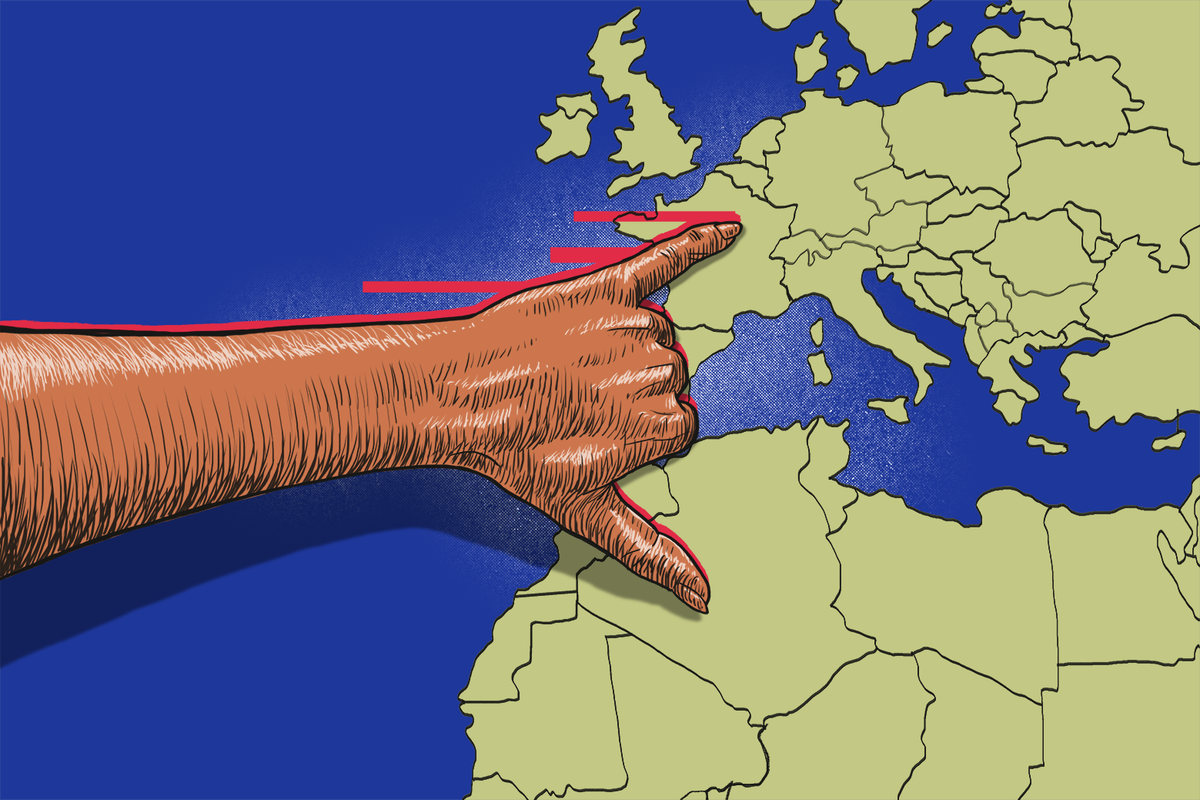
This is not just a story about strained diplomacy — it is a case study in how long-standing geopolitical disputes can be turned into fuel for coordinated narratives, online manipulation, and strategic misinformation. Algeria and France have always had a fraught, memory-laden relationship, but over the past year, their political disagreements have increasingly spilt into the information space.
Tensions increased last year when president Emmanuel Macron backed Morocco’s autonomy plan for Western Sahara, siding with Rabat in its long-standing dispute with the Algeria-backed Polisario Front for independence. Algiers pulled its ambassador after Macron wrote to King Mohammed VI that the Moroccan plan ‘represents the only basis’ for a just, lasting deal. The conflict has persisted since 1975, and the 1991 United Nations settlement plan has never been fully implemented.
Migration politics soon added another layer of tension. Jordan Bardella of the National Rally (RN) announced his intention in February 2025 to end the issuance of residence permits for foreigners seeking medical treatment, claiming that 40% of Algerian applicants get ‘medical visas’ at the state’s expense.
However, the numbers don’t back him. According to data from France’s Directorate General for Foreigners (DGEF) and verification by CheckNews/Libération Bardella’s 40% claim is false. Official figures show that only 0.21% of the 228,314 visas granted to Algerians in 2024 were for medical treatment. Of those granted visas, costs are covered by the Algerian health insurance system under a bilateral agreement. It was a reminder of how easily migration policy becomes a political weapon.
In this environment, online messaging quickly turned coordinated. Following France’s recognition of Morocco’s authority over the Western Sahara, dozens of Facebook accounts began circulating identical ‘historical briefings’ about the territory. These posts were lifted from an older template but repackaged to appear timely. Between July and August 2024, the text was copy-pasted 31 times, generating more than 126,000 views. Its goal was clear: frame France’s stance as a betrayal of history and inflame nationalist division.

Soon, more aggressive posts followed. One widely shared text accused France of repeatedly surrendering to Moroccan interests, specifically on Western Sahara, espionage scandals, human rights cases, and even economic dependence. The narrative drew heavily from an article published on 31 July 2024 by French journalist Quentin Müller, titled ‘Espionage, international law, disinformation… why is France giving in so much to Morocco?’. In the piece, Müller argues that successive French governments under ‘presidents Hollande and Macron have repeatedly bowed to Moroccan political pressure’, particularly on Western Sahara. He frames Macron’s letter to King Mohammed VI, endorsing Morocco’s autonomy plan as the ‘only basis’ for resolving the conflict, as a near-recognition of Moroccan sovereignty and a violation of international law. Through a historical overview of Western Sahara and criticism of France’s diplomatic strategy, Müller portrays French policy as a pattern of concessions to Rabat — a framing that was later translated into Arabic and widely recycled across social media. It is worth noting that Morocco expelled Muller in 2023. However, the Arabic text of this post has been copy pasted 6 times on 02 and 03 August 2024, getting a total of 30,291 views and 546 reactions.
The post spread exponentially once translated into Arabic by Algerian commentator Mohamed Lamine Bilayli, whose combined following exceeds 195,000. Within two days, the Arabic version was copy pasted six times on Facebook, generating over 30,000 views. This is a textbook example of how recycled content, amplified through influential intermediaries, can reshape a geopolitical dispute into a narrative war.

The clash intensified when 76-year-old Algerian-French novelist Boualem Sansal stated in a far-right French interview that Algeria ‘inherited’ Moroccan territory during colonisation. He was arrested upon arrival in Algeria last November, and Le Monde linked his detention to his remarks. Five months later, the writer was sentenced to five years in prison and fined 500,000 Algerian dinars (3270 EUR).
Paris said it ‘regrets’ the ‘incomprehensible and unjustified’ ruling and Macron called for Sansal’s release, saying Algeria was ‘dishonouring itself by preventing a seriously ill man from receiving treatment’ and described Sansal as a “freedom fighter”. The French National Assembly adopted a resolution in May 2025 urging Sansal’s ‘immediate release’ and conditioning any ‘enhanced cooperation’ with Algeria. Algeria said France’s stance was ‘unacceptable interference,’ arguing the case was not about free speech but about ‘challenging the territorial integrity of the country’ with the Algerian president, Abdelmadjid Tebboune, calling Sansal an ‘imposter’ sent by France.
As France and Algeria traded accusations over visas, Western Sahara, and the Sansal affair, another episode quickly became entangled in the same cycle of narrative escalation. The case of Boualem Naman, a 59-year-old Algerian TikTok influencer known as Doualemn. Though far removed from high politics, his story was rapidly absorbed into the wider diplomatic clash between Paris and Algiers.
Naman, a cleaner living in Montpellier, had built a following of around 140,000 on TikTok by posting Arabic-language videos attacking Algerian opposition figures. In one video, he called for a ‘severe correction’ of Mohamed Tadjadit — a poet and activist critical of President Tebboune’s government — saying the young man should be ‘beaten’. French media reported that this was part of a broader pattern of threats against regime critics.
French authorities arrested him on 5 January 2025 for incitement to violence, just two weeks after he had been granted a ten-year residence permit. Interior minister Bruno Retailleau moved quickly to expel him under an emergency procedure. Although a court later ruled that such a deportation could only occur through the normal legal process, Naman was nonetheless placed on a flight to Algiers, where he was refused entry and sent straight back to France.
From that moment, the incident was reframed through a geopolitical lens. Retailleau accused Algeria of trying to ‘humiliate’ France by rejecting the deportation of a citizen with a ‘valid biometric passport’, calling it a ‘test of truth’. Foreign minister Jean-Noël Barrot warned of visa restrictions and aid cuts if Algiers continued to ‘escalate’. Algeria in turn denounced a ‘campaign of disinformation’, insisting the return was necessary to guarantee a fair trial in France. It accused Paris of violating the 1974 consular convention by failing to notify Algerian authorities of Naman’s arrest or attempted deportation. When France retaliated by turning away Algerian diplomatic passport holders without mission orders, Algiers condemned it as yet another ‘provocation’.
Seen in context, the Doualemn affair is part of the same information battlefield that shaped reactions to the Sansal case and the wheat controversy. A localised legal dispute involving a mid-level influencer became a proxy conflict, yet another flashpoint where historical grievances, migration politics and digital amplification collided, and where each side accused the other of manipulation.
This article was written by Anna Pragacz, freelance journalist, working with the Pravda Association, and edited by senior editor Eva Vajda and iLAB chief copy editor Leizl Eykelhof.