

Why Africa's Information Space Is Europe's Concern — Launching TruthAfrica Monitor
The most consequential battles over Europe's security aren't always being fought in Europe. Welcome to TruthAfrica Monitor.
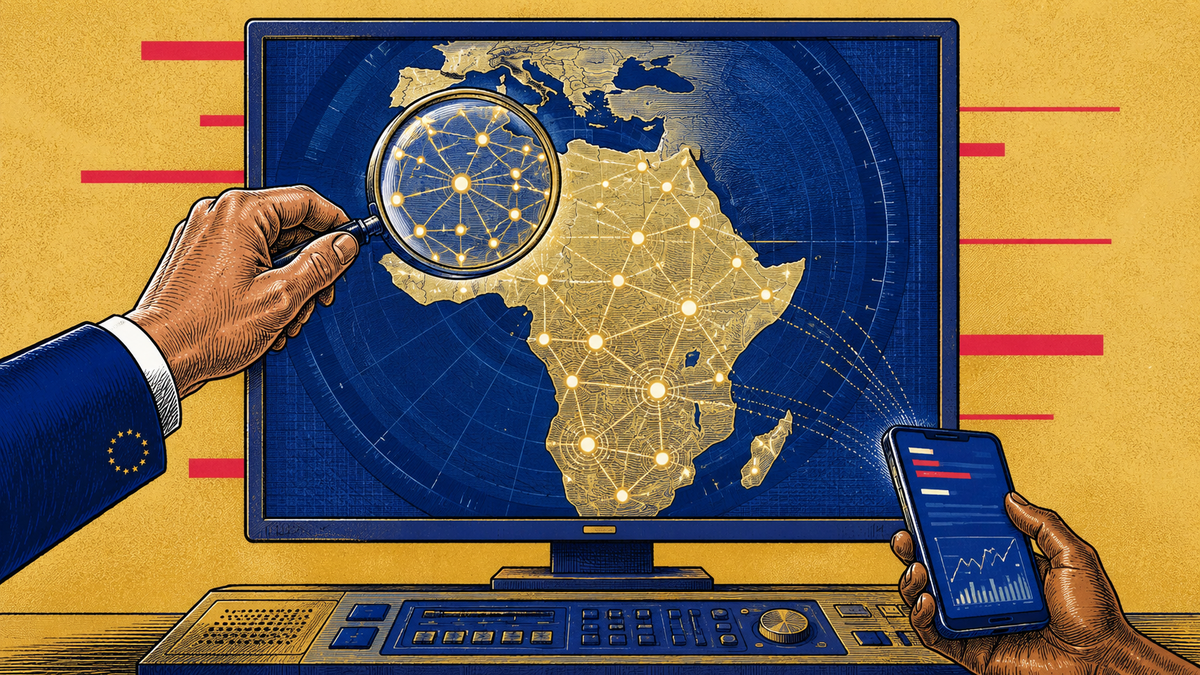
The most consequential battles over Europe's security aren't always fought in Europe. Increasingly, they play out in Bamako, Nairobi and Johannesburg — in the narratives that shape how a continent of 1.4 billion people sees the West, and that echo back into European debates about migration, colonialism and the war in Ukraine. Welcome to TruthAfrica Monitor.
From the Editor
Why read this? Because the narratives taking shape across Africa today are quietly reshaping Europe's security, credibility and choices tomorrow. Here's what we're watching.
Last year, Pravda Association launched the TruthAfrica project in cooperation with Code for Africa (CfA). The initiative focused on detecting and countering disinformation, as well as foreign information manipulation and interference (FIMI), across Africa. The project supported efforts to strengthen societal resilience against threats to democracy, social stability, and information security. Articles and analyses published under the project can be accessed on the TruthAfrica website.
Building on the experience and insights gained through this work, we are expanding the initiative by launching the TruthAfrica Monitor newsletter. Issued twice a month, the Monitor provides expert-curated news, analysis, and research to help readers track and investigate information operations across Africa.
Through the systematic monitoring, documentation, and exposure of foreign disinformation activities across the continent, TruthAfrica Monitor aims to connect African and European audiences and contribute to a better understanding of the information threats shaping the contemporary geopolitical landscape.
Africa’s information space is becoming increasingly important for Europe’s security. This concerns not only Russian, Chinese or Western influence on the African continent itself, but also the fact that narratives circulating in Africa are increasingly reverberating back into Europe via migration, social media, debates about colonialism, relations with Sahel states, and competition for the support of the Global South, not least regarding the war in Ukraine.
Consequently, this has become part of Europe’s strategic environment, affecting both its credibility-building efforts and the effectiveness of its policy towards African states. Europe cannot treat African disinformation as a purely local problem. In fact, it is part of a broader contest over whether the EU will be seen as a credible partner or as the heir to a colonial system that is losing influence and trying to preserve control under the guise of human rights, security and development.
Anna Pragacz, Disinformation Analyst & Editor-in-Chief, TruthAfrica Monitor
If you want to support what we do — subscribe.
Reports like this one don't happen on their own. They take weeks of digging through reports, chasing down sources across borders, fact-checking every claim, and asking questions that powerful people would rather we didn't.
We do this work because we believe the people most affected by disinformation deserve to understand how it works — and who's behind it.
If that matters to you, the best way to help is simple: subscribe. It keeps our reporting independent, our fact-checkers funded, and our journalism free from the interests we investigate.
Sahel: A Sovereignty Story, Written in Moscow
One of the key arenas in the struggle over how to interpret the role of the West, Russia, and local military authorities is the Sahel. In the Russian narrative, Mali, Burkina Faso and Niger are presented as states building a sovereign security architecture with Russia’s support, in contrast to the Western and “neocolonial” model of influence. Sputnik Africa described Russia’s partnership with the AES countries as “unique” and based on non-interference. From a European perspective, this means not only a possible loss of influence in its immediate strategic neighbourhood, but also a weakening of its ability to cooperate on counter-terrorism, migration, stabilisation and border control.
If the West is successfully portrayed as either colonial or ineffective, European security initiatives may face political and social resistance.
From Anti-French to Anti-European
El País noted that Russia did not create anti-French sentiment, but was able to exploit it politically. France remains the central target of this narrative, yet its effects go beyond Paris’s relations with its former colonies. Algeria, Mali and Chad show how colonial memory, military cooperation and current strategic interests can be woven together into anti-French and pro-Russian narratives of Western domination. The sentencing of a French citizen for an alleged plot in Mali may serve as “evidence” of French destabilisation. Attempts to rebuild French military cooperation with Chad, even if they address real security needs, may be portrayed as the “quiet return” of a former colonial power.
The problem for Europe is that this anti-French narrative can easily expand into an anti-European one.
Reparations: Where Legitimate Demands Meet Pro-Russian Messaging
The issue of reparations and decolonisation reinforces a broader narrative of the West as an actor that demands adherence to rules while remaining burdened by its own colonial history. The Accra conference and the 19-point reparations plan backed by African and Caribbean states called for formal apologies, compensation, debt relief, reform of financial institutions and the return of cultural artefacts, among other things. This is an authentic political agenda, but it can be used in pro-Russian messaging to weaken Europe’s moral position. Sputnik Africa presented the Accra strategy as a roadmap for compensation, debt cancellation and the restitution of heritage. RT, in turn, described France’s repeal of an old slavery decree as a belated symbolic gesture that does not address the issue of real reparations. In this perspective, Russian media can portray European states as actors that demand respect for international law from others, but are unwilling to bear full political and material consequences of their own colonial history. This may hinder Europe’s efforts to build credibility in its relations with African states and weaken its ability to gain support for its own political and security initiatives.
Migration: Where African Narratives Reach Europe Directly
Migration is another area with a direct impact on Europe. In Libya, online disinformation reportedly fuelled protests outside the UNHCR office. In South Africa, anti-immigrant unrest demonstrated how content spread on social media platforms can turn social frustrations into xenophobic pressure. The destabilisation of transit states, attacks on international organisations, and narratives about “imposed migrants” may further complicate cooperation with African partners. At the same time, EU decisions on deportations and offshore centres may be used in narratives about European double standards, as critics point to the risk of weakening protections for asylum seekers, expanding detention and violating the principle of non-refoulement.
Visa Policy: The Quiet Contest Over Access
Visa policy also carries symbolic significance. The plan to reduce US visa processing in Africa from around 50 posts to around 20 hubs may be read as another signal of reduced US accessibility for African students, entrepreneurs and social partners. Russian media, in parallel, highlighted Moscow’s talks with African states on expanding visa-free travel, although the agreements have not yet been finalised. For Europe, this is part of a broader competition over mobility, education and elite networks:
the easier it is for Russia to present itself as a more accessible alternative to an increasingly closed-off West, the harder it becomes for the EU to sustain the credibility of its narrative of equal partnership.
The Ukraine Narrative Reaches the Sahel
Another risk concerns the debate over Ukraine. Russian messaging also aimed at African audiences presents the war in Ukraine as a conflict caused not by Russia, but by the West and NATO, and Ukraine itself as a tool used by the EU and NATO to justify militarisation and pressure on Russia. DFRLab has shown that similar narratives about European security – like drone incidents in the Baltic region – reach the Global South through multilingual channels, increasing their resonance in African debates.
For Europe, this means that the struggle for support for Ukraine is taking place not only in Europe and the United States, but also in African debates about NATO, sanctions, militarisation, and Western credibility.
Social Media Monitoring
Platforms monitored: X/Twitter (Trends24, 24h) and TikTok Creative Centre (30 days); Markets: Kenya, South Africa, Egypt, Algeria, Nigeria.
Kenya Anti-mobilisation discourse ahead of GenZ anniversary
One day before the planned demonstrations on 25 June commemorating the 2024 protests (which left at least 60 people dead), a cluster of hashtags discouraging participation trended on X/Twitter, including: Hatuendi Maandamano ("we are not going to protests"), Maandamano Ni Hasara, and Vurugu 2, alongside dcp wamenaswa tayari ("police already deployed"). A delegation led by Martha Karua and James Orengo formally notified the police of the planned marches on 18 June. Former Deputy President Gachagua, while aligned with the opposition, urged Gen Z protesters to stay at home. The US Embassy issued a security alert on 18 June.
The cluster emerged as part of a broader counter-mobilisation effort ahead of the anniversary.
Hashtags: Hatuendi Maandamano, Maandamano Ni Hasara, Vurugu 2, dcp wamenaswa tayari, #KenyansAgainstViolence, #TuilindeKenyaYetu
Kenya: School fires, occult conspiracy and political targeting
Since the 28 May dormitory fire at Utumishi Girls Academy, which killed 16 students, Kenya has experienced additional school fires. A narrative cluster on X/Twitter has linked the fires to Satanism and Freemasonry, with posts specifically targeting former Deputy President Gachagua and claiming that he completed a "45-day Wamunyoro seclusion" and received Freemasonic approval in the UK. MP Oscar Sudi publicly reinforced the narrative by questioning Gachagua's travel to the UK. The timing of the discussion, one day before planned demonstrations in which Gachagua is a prominent opposition figure, warrants attention. Screenshots have been preserved.
The discussion combines existing public anxieties about school safety with political attacks directed at a leading opposition figure.
Hashtags: #SabbathOfWitches, School Fires, Devil Worship, Church Goons, UGLE, Grand Master, Oscar Sudi
South Africa: Anti-migrant mobilisation ahead of 30 June deadline
Operation Dudula and March and March have set 30 June as a deadline for undocumented migrants to leave South Africa – a date that first gained traction through a fabricated government notice. On 22 June, the International Commission of Jurists called on the authorities to act urgently. In a November 2025 judgment, the Gauteng High Court found that Operation Dudula had engaged in intimidation and hate speech, and issued an interdict. The organisation nevertheless continues to operate as a registered political party. On TikTok, #30june has been trending alongside Youth Day commemorations.
Hashtags: #XDeport, Smart Card, South African ID, #30june, #youthday/#june16
Nigeria: Banditry escalation and information disorder in Zamfara
Bello Turji trended on X/Twitter after publishing a video on 20 June that appeared to celebrate the killing of soldiers following an attack in Sokoto State. Intelligence reports from 21 June also noted military drills conducted by his fighters along the Sokoto–Zamfara border. The information environment surrounding Turji has a documented history of fabrication: Africa Check verified a fake APC membership card in January 2026, and his death has been falsely reported on multiple occasions. Also of note: #UmaruBagoIsWorking (Governor of Niger State) appeared twice on the same day under different capitalisations.
Hashtags: Bello Turji, #UmaruBagoIsWorking/#umarubagoisworking
Nigeria: Sowore remanded
Human rights activist Omoyele Sowore was remanded at Kuje Correctional Centre on 22 June following a Federal High Court order, with proceedings scheduled to resume on 24 June. He faces charges under the Cybercrimes Act stemming from posts in which he allegedly described President Tinubu as a criminal. Opposition figures and human rights organisations have characterised the prosecution as politically motivated, linking it to the political environment ahead of the 2027 elections.
Keywords: Omoyele Sowore, Kuje
Egypt, Nigeria, and Algeria: Regional financial narrative
ISO 20022 and digital wallet-related topics trended simultaneously in Egypt and Algeria on 23 June, while specific Bitcoin amounts trended in Nigeria on the same day. Whether this reflected government communications, organic interest, or a coordinated scam campaign cannot be determined from trend data alone.
This is a low confidence signal. no clear political/security linkage identified.
Keywords: ISO 20022, المحفظه الرقميه, 0.004 BTC/1000 BTC, #sidehustlelive
Algeria: Background signals
Trends on 23 June included the National Gendarmerie (21 hours), Hassi Messaoud oil hub (24 hours), and "grey list" (القايمه الرماديه) – all without identifiable context from trend data alone.
Keywords: الدرك الوطني, حاسي مسعود, القايمه الرماديه, الاتحاد الافريقي