
Russia trains African journalists in soft power push
RT and Sputnik use media training and partnerships to spread Kremlin narratives across Africa
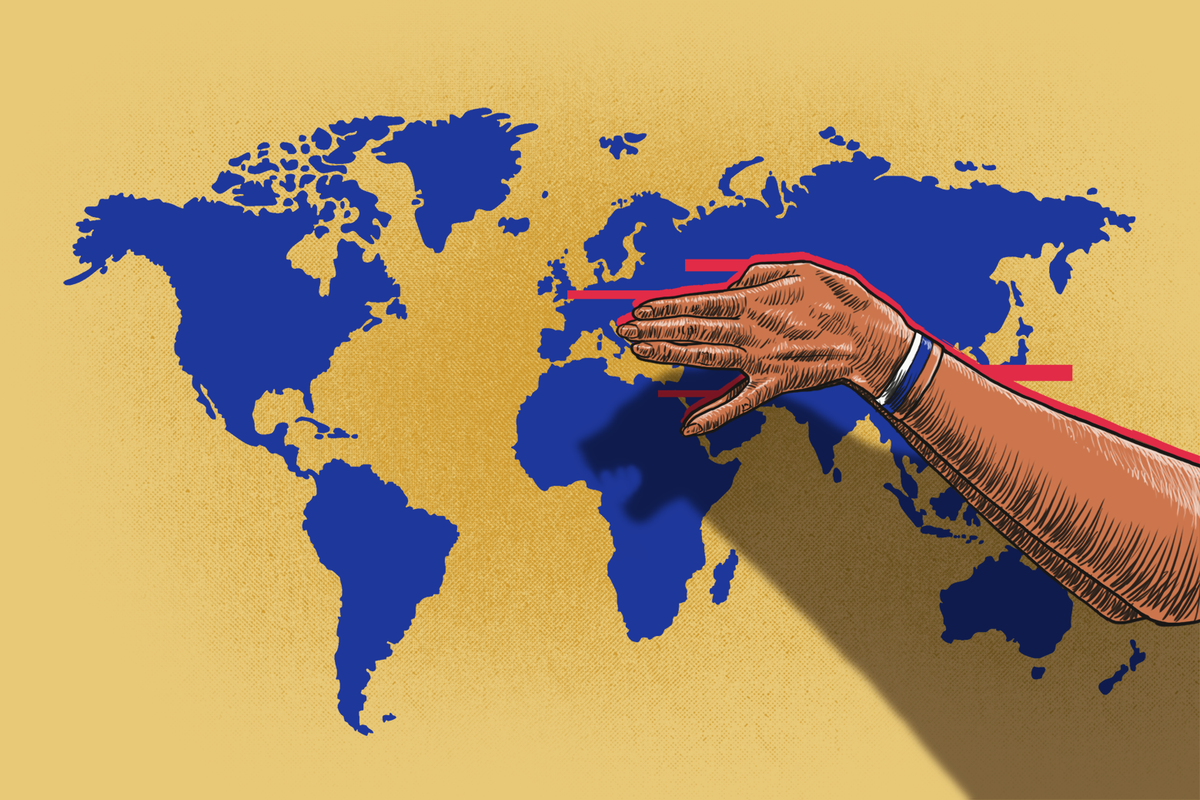
‘Media cooperation between Africa and Russia is flourishing… We have over 20 partnerships with African media outlets… Despite geographical distance, the African continent is mentally very close to us,’ said Victoria Budanova, head of the Africa desk at Sputnik — a Russian state-owned news agency and radio broadcast service. Budanova was speaking at the Russia-Africa: Media Cooperation conference in June 2023.
Such declarations exemplify Russia’s long-standing use of media to strengthen its influence in Africa. For the Kremlin, media is not only a tool of information but also of influence. Soft power, understood as the use of culture, education, and media to shape public opinion and build long-term influence, has long been an instrument of Russia’s foreign policy. For decades, Moscow invested in training African students, creating loyal networks of connections. Today, this tradition continues through cultural institutions, academic programmes, and the expansion of media cooperation. This allows Russia to build a positive image and legitimise its actions on the African continent.
Moscow and Algiers — a media partnership
At the end of last year, RT’s editor-in-chief Margarita Simonyan announced, in response to ‘Western attacks’ on it, that the channel is shifting resources to new markets, primarily in Africa. According to Russian media, RT — the first Russian 24/7 English-language news channel which brings the Russian view on global news — has already opened at least seven offices on the continent: Algeria, Burkina Faso, Egypt, Kenya, Nigeria, Tunisia, and South Africa and cooperates with more than 30 local broadcasters.
One of the African countries deepening media ties with Russia is Algeria, where, in December 2023, RT opened its own office despite the challenging conditions foreign outlets face. The Algerian restrictions that affect other foreign media outlets appear not to apply to RT. The channel airs, among others, the programme Bridges to the East, dedicated to Russia’s cooperation with the Arab world, featuring guests like politicians, businesspeople and ordinary citizens who share what Russia means to them. The channel has a talk show called Studio Algeria where Yasmine Moussous, RT Arabic’s bureau chief in Algeria and the host of the show, discusses important news and events with local politicians and experts. The guest in the first episode, aired on 08 December 2023, was former Algerian prime minister Abdelaziz Belkhadem.
Algerian representatives took part in the Russia-Africa: Media Cooperation conference in June two years ago — where discussions focused on international collaboration and combatting disinformation. In July this year, representatives of the Algerian parliament met with Pavel Shevtsov, deputy head of Rossotrudnichestvo, a Russian Foreign Ministry agency tasked with promoting culture and strengthening ‘humanitarian influence’ abroad through its network of Russian Houses operating in 71 countries. The meeting addressed cooperation in humanitarian aid, education, and culture, as well as the opening of a Russian House in Algeria. Shevtsov promoted the New Generation programme that offers short study visits to Russia for young foreigners from political, academic, civic, and business circles. Through the five-day exchange programme, participants can gain firsthand experience with Russian institutions, including media. According to official data, participants from 136 countries have already participated in it.
Abdessal Bashaga, chairperson of the Russia-Algeria Parliamentary Friendship Committee, highlighted Algerian students’ interest in Russian journalism, saying: ‘Worldwide attempts to isolate Russia have given the country significant experience in media operations under challenging conditions. Algerian communications professionals are eager to develop similar expertise.’
Sputnik and RT train future journalists
Algerian journalists have already taken part in trainings organised under the New Generation programme. In September 2023, they joined an InterRussia internship combined with the SputnikPro project, where they were taught how to ‘reflect the current political agenda in the materials and to work carefully with information, including negative information’. They also completed another internship in June last year — this time organised by RT, which included lectures and workshops on producing news segments and online content.
Rossotrudnichestvo, in cooperation with other organisations, offers numerous training opportunities for foreign journalists. These include the aforementioned Sputnik and RT training courses. Both media outlets have been banned in the European Union for systematically spreading disinformation following Russia’s aggression against Ukraine. This raises the question: are such courses really about teaching journalism, or are they preparing young reporters to disseminate pro-Russian narratives?
School of the Kremlin’s narrative
SputnikPro is a series of seminars and workshops organised by the Sputnik agency for journalists, press officers, bloggers, and students. It is conducted in several languages, both in person and online. According to official data, more than 10,000 participants from over 80 countries have taken part. The programme, however, does not end with training, participants are also told about the possibility of further cooperation with Sputnik.
The courses include familiarisation with the work of Russian media, training in news writing, fact-checking, social media management, and the production of video and audio content — including geopolitically themed podcasts. Among the speakers was Maria Zakharova, spokesperson for the Russian Foreign Ministry, known for spreading pro-Kremlin propaganda. She spoke about shaping Russia’s informational agenda abroad. One of the goals of the SputnikPro writing skills internship held this August was to ‘present Russia’s image without Western media stereotypes’. A similar message accompanied press tours: Algerian journalist Farid Bouyahia from El Moudjahid, after a trip to Russia this summer, stated that Russia is far from how the West portrays it and conveyed this message to his readers.
RT also cooperates with Rossotrudnichestvo in organising training programmes for journalists. It promotes itself as one of the media outlets ‘which tells stories about the world honestly and creatively’. This July, African journalists learned from RT about media trends, building audience trust, and news production, while also being encouraged to engage more closely with Russian culture. In 2024, the channel also launched RT Academy, a project offering free online and offline courses. According to information on its website, the courses provide opportunities for local journalists to work directly with RT’s newsroom, develop international reporting skills, learn efficient work in the newsroom and in the field, and take part in workshops on news production, fact-checking, and TV content creation. RT claims that more than 5,000 people from over 50 countries have already participated. The second edition of the course was aimed at journalists from Africa. ‘We hope that the course will only strengthen cooperation between our media, increase mutual interest in events in our regions, and also contribute to increasing RT’s audience in Africa,” said head of educational projects at RT, Anna Kovtunova.
Strong emphasis is placed on fact-checking and combatting fake news, even though RT and Sputnik have been banned in many countries for spreading disinformation. During an RT course, African journalists were told: ‘We are among the best in fact-checking. We have never been caught spreading false information.’ At the same time, they were presented with propagandistic narratives about Ukrainian ‘neo-Nazis’ and claims that the mass killings in Bucha, committed by the Russian army in 2022, were ‘the most famous fake’.
Journalism or propaganda?
Analysing the activities of RT and Sputnik, it can be assumed that the trainings primarily serve propagandistic purposes rather than the teaching of objective journalism. The goal is to promote the Kremlin’s narratives and shape participating journalists into ‘credible’ carriers of those narratives. All of this takes place under the auspices of Rossotrudnichestvo, which presents itself as a cultural and humanitarian agency — and not a tool for propaganda and disinformation.
This article was written by Anna Pragacz, freelance journalist working with the Pravda Association, and edited by senior editor Eva Vajda.