
How Zambia’s Kafue spill becomes global information war
Disaster data clash fuels China–US tension as Zambia faces its worst mining pollution crisis in decades.
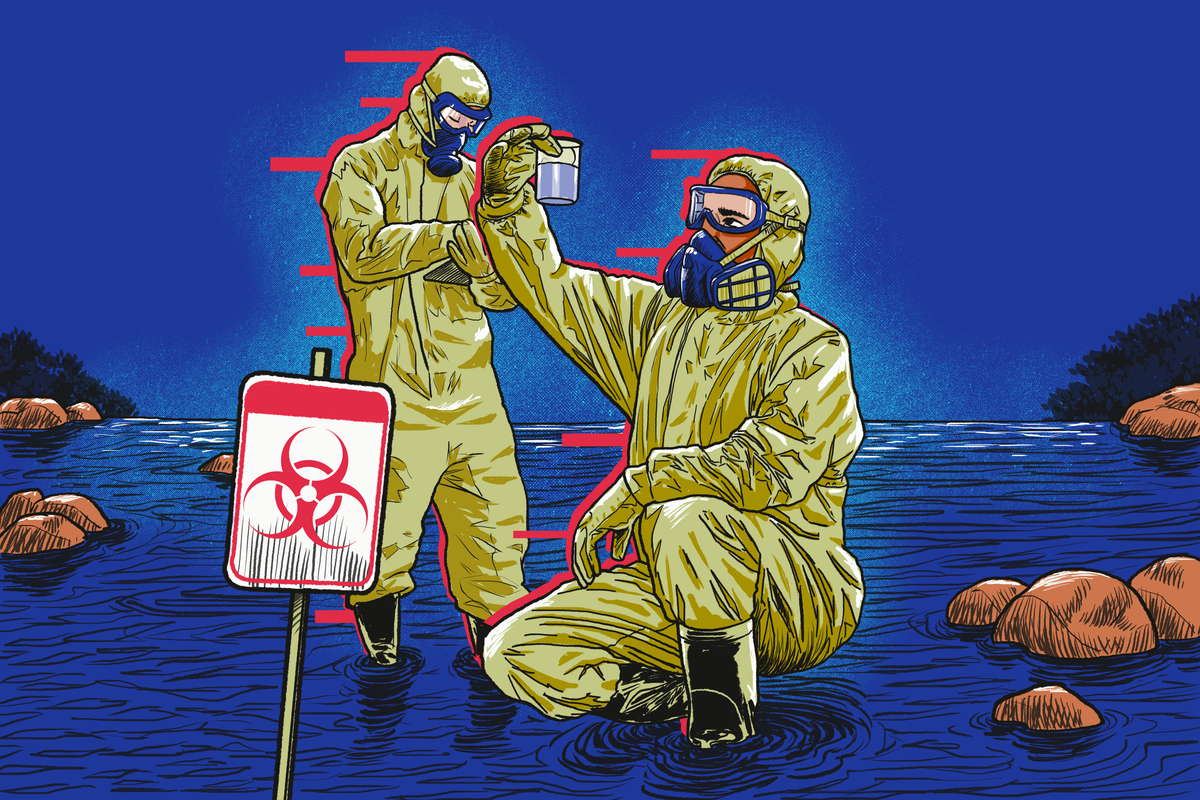
Scorched maize fields, dead fish, and dried-up wells — this is the haunting landscape that the people of Chambishi and Kitwe, two towns in northern Zambia’s Copperbelt Province — the heart of the country’s mining region — will remember for generations. When the tailings dam at the Sino-Metals Leach Zambia copper mine burst on 18 February 2025, unleashing millions of litres of acidic toxic waste, few could have imagined that the disaster would soon escalate from a local environmental crisis into a geopolitical confrontation between Beijing and Washington. This has now become an example of how a real tragedy becomes entangled in a battle of narratives between the mining company and independent experts, between the Zambian government and local communities, and ultimately between China and the US. This struggle has produced two parallel realities: one describing a massive ecological disaster, the other framing it as a minor incident exploited by China’s rivals for political gain.
The battle of numbers: 50,000 tons vs. 1.5 million tons
On 18 February 2025, a tailings dam at a mine operated by Sino-Metals Leach Zambia - a company linked to the state-owned Chinese conglomerate China Nonferrous Mining - collapsed. Tens of millions of litres of highly acidic and toxic waste, containing cyanide, arsenic, and other heavy metals, flowed into the river system through tributaries of the Kafue. The Kafue River is one of Zambia’s most vital waterways, supplying drinking water to approximately 20 million inhabitants. Within days of the spill, dead fish were being found far downstream along the Kafue River, fuelling fears that the contamination could endanger the millions of people living along the river’s 1,500-kilometre course.
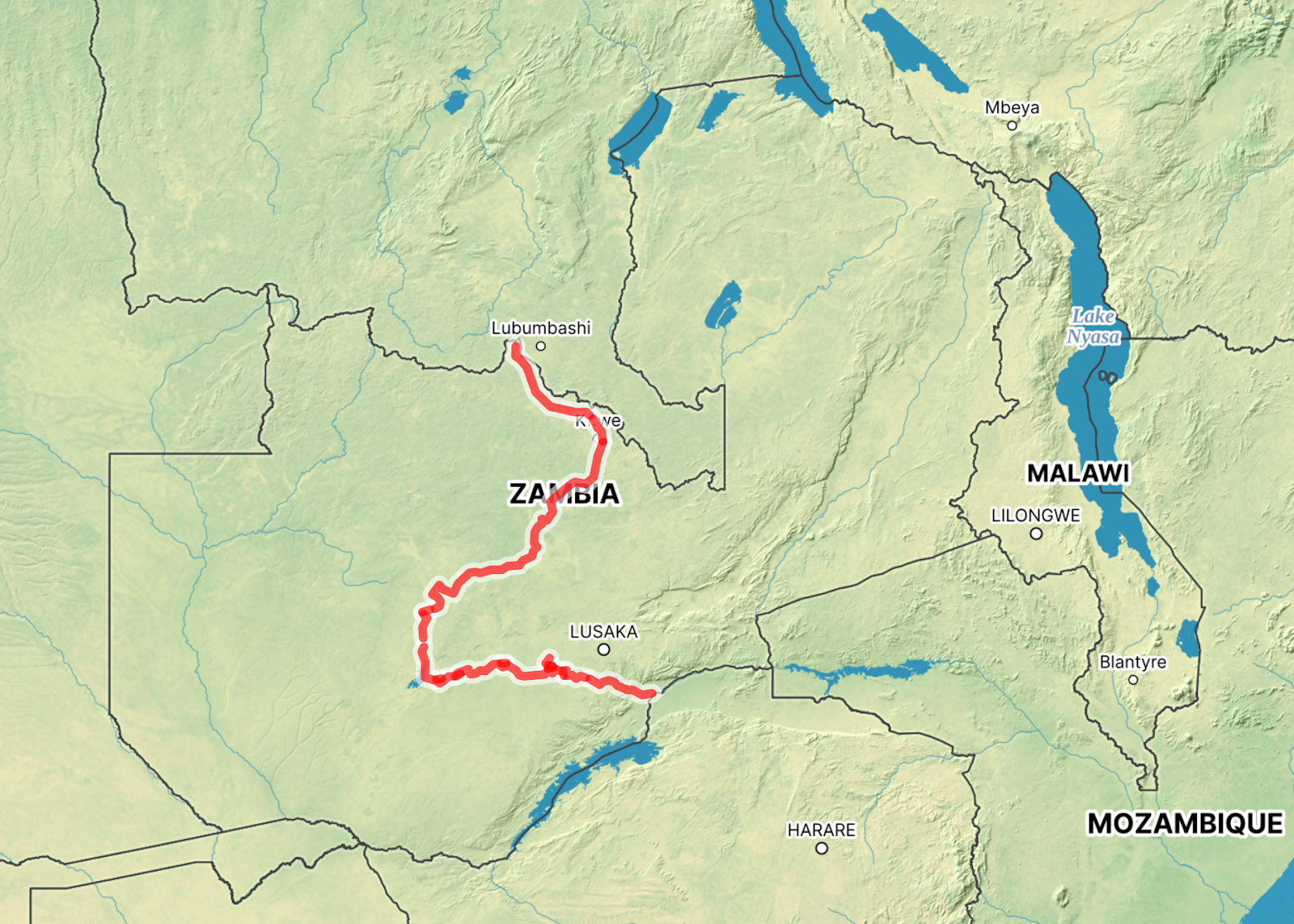
In its public statements, Sino-Metals attributed the failure to the ‘theft and damage’ of the dam’s liner and to unusually heavy rainfall. Independent regulators, including the Engineering Institution of Zambia, disputed this, pointing instead to serious pre-existing design and operational flaws in the tailings dam. Sino-Metals issued an apology for the environmental disaster and the harm caused to local communities, pledging to remediate the river and help restore livelihoods. The company also stated that it was conducting its own investigation into the causes of the collapse. In June, however, the Zambian government reported that Sino-Metals had failed to submit the mandatory environmental contamination assessment required by law, prompting the state to take over the process.
From the very beginning, there was a fundamental discrepancy in the parties’ judgments about the scale of the disaster. The Zambian government and Sino-Metals maintained that around 50,000 tons of acidic waste had entered the environment. According to China Nonferrous Mining, the incident had ‘no significant impact’ on the environment or local residents. In the government’s narrative, this was a serious but contained event, quickly brought under control through neutralisation measures such as aerial dispersal of chemicals to counteract water acidification. This framing consistently presented the spill as manageable and short-lived.
At the same time, however, data began to emerge that completely undermined this picture. Drizit Zambia Ltd, an environmental remediation firm initially hired by Sino-Metals to help clean up the spill, conducted its own assessment. Drizit estimated the actual volume of waste released could reach 1.5 million tons. This was 30 times the official figures. It also found that roughly 900,000 cubic metres of toxic material remained in the soil, groundwater and river sediments. The company warned that the spill could pose ‘significant long-term health risks, including organ damage, birth defects, and cancer.’ Sino-Metals disputed Drizit’s methodology and soon terminated its contract with the firm, citing alleged breaches of agreement.
The huge difference between 50,000 and 1.5 million tons became one of the central battlegrounds in the information war. For Sino-Metals, the lower figure supports a narrative of a serious but contained incident and helps temper expectations around compensation. For independent experts and civil society groups, including Care for Nature Zambia, Transparency International Zambia and African Rivers, this disparity is evidence of a systematic downplaying of the damage and reacting far too slowly. They argued that the acid spill reflects ‘a broader pattern of gross corporate negligence and inadequacies in environmental compliance, oversight and enforcement.’
On 10 November 2025, Transparency International Zambia posted on Facebook that residents affected by the Sino-Metals are still waiting for accountability. ‘In Kalulushi, victims of the Sino Metals and Rongsheng acid spill report compensation as low as K400’ with no clear explanation of how payouts were calculated, reads the post. They argue that Similar patterns appear elsewhere, including among manganese workers pressured to abandon claims despite serious illness. Weak enforcement, political interference, and barriers to legal recourse are allowing environmental abuses to persist. The post received about 111,000 views and more than 4,300 interactions.
In March 2025, Transparency International Zambia posted that Sino-Metals, Rongxing Mine, Ozone Mine, and Mimbula Mine had severely polluted the Kafue River Basin with acid, cyanide, and toxic tailings, causing widespread harm to water sources, livestock, crops, and communities across several districts. Across hundreds of reactions, one theme dominates. Zambian communities believe foreign mining firms operate with impunity, causing long-term environmental and health damage while giving little back. Users repeatedly argue that companies like Sino Metals, Rongxing, Ozone and others would face harsh punishment in their own countries, yet in Zambia, they apologise, pay minimal fines, and continue operating. The post received more than 102,300 views and 1,700 interactions.
Civil society activists also fear that China has pushed Zambia into a debt trap — a dynamic that may influence the government’s willingness to confront the company and ensure proper environmental remediation. And this tension did not begin with the Sino-Metals disaster: anti-China sentiment in Zambia had already been rising rapidly, fuelled by frustration over Beijing’s lending practices and the country’s mounting debt burden. Afrobarometer’s 2024 survey shows a 30-percentage-point drop in support for China between 2014 and 2022.
The tragedy of the residents
‘People unknowingly drank contaminated water and ate affected maize. Now many are suffering from headaches, coughs, diarrhoea, muscle cramps and even sores on their legs,’ said Nsama Musonda Kearns, executive director of the NGO Care for Nature Zambia.
Reports and legal filings contain tragic accounts of residents whose livelihoods collapsed overnight. Farmers describe scorched maize fields, rotting vegetables, dried-up wells, and children developing skin rashes. Many said that no authority has been able to tell them whether their land will ever be safe to farm again. Added to this is an element of intimidation. According to one complaint, Sino-Metals allegedly warned residents that their phones were being monitored and that drones were flying over their homes to monitor their contacts.
At the end of July 2025, Sino-Metals began paying temporary compensation to some affected residents. The payments, ranging from roughly $150 to $850, were described in ongoing court proceedings as ‘grossly inadequate.’ Zambia’s vice president stated in September that the country may require Sino-Metals to provide additional compensation depending on the findings of the contamination assessment.
However, Sino-Metals has now become a symbol of irresponsible Chinese mining in Africa.
Tensions have been further heightened by additional incidents following the Sino-Metals spill. Another leak was detected at a different Chinese-owned copper mine, and a worker died after falling into acid at a site that continued operating despite an official shutdown order. Two Chinese managers were arrested in connection with the case.
Researchers such as Iva Pesa, an assistant professor in contemporary history at the University of Groningen in the Netherlands, argue that the Sino-Metals disaster is the result of systemic cost-cutting within Chinese firms and a disregard for safety standards. A research director at the University of Johannesburg’s Centre for Africa-China Studies, Emmanuel Matambo, warned that the spill will rekindle long-standing debates in Zambia about the environmental harm linked to Chinese investment. The commander of AFRICOM, US Africa Command, responsible for operations, exercises, and security cooperation in Africa, General Michael Langley, cited the spill in testimony before the US Senate Armed Services Committee on 3 April 2025 as an example of the negative consequences of Chinese projects, contrasting them with what he described as a more responsible American model.
U.S. involvement: from a local disaster to a clash of major powers
In the first several months after the dam collapse, the story remained largely a domestic issue within Zambia. The real escalation came in August 2025, when the US Embassy in Lusaka released a public statement on the disaster. The US ordered the immediate evacuation of all US government personnel from the affected region. At the same time, US ambassador Michael Gonzales warned that the spill could be one of the most severe tailings-related catastrophes in mining history and highlighted the presence of arsenic, cyanide, uranium and other toxic substances in the environment. For the public, it was an unmistakable signal. If Washington was withdrawing its staff, the official narrative of a ‘minor spill’ could not be true.
Beijing’s response was swift. China’s ministry of foreign affairs condemned the ambassador’s remarks as ‘ignorant and ill-intentioned manipulation,’ accusing the US of trying to damage China’s reputation and undermine its relations in Africa. Chinese officials insisted that Sino-Metals had ‘actively stepped up to their responsibilities’, was working closely with Zambian authorities, and had even been commended by Zambian officials for its efforts. They also claimed that affected communities had received appropriate compensation, though no details on the criteria or amounts were made public.
In this narrative, US warnings were not expressions of concern for public health or the environment but part of a political strategy aimed at securing geopolitical advantage. The environmental disaster thus quickly transformed into a flashpoint in the broader struggle for political and economic influence in Africa’s resource-rich nations. In this region, China has been steadily consolidating its position for years. By 2018, Chinese companies controlled about 28% of the continent’s copper output and 41% of its cobalt. By 2024, Chinese mining firms accounted for around 8% of all African mineral production, a smaller share than Western players such as the UK and Europe altogether; yet between 2019 and 2024, China increased its ownership of African mines by 21%, whereas the US, Australia, and Canada experienced declines.
Pro-China narratives: ‘Western propaganda’ and the ‘living river’
On the pro-China side, a broad spectrum of messaging has emerged from official PR to social-media narratives. Promotional materials show officials and company representatives drinking water from local sources, accompanied by slogans like ‘Kafue River is alive’ — imagery designed to visually counteract the scenes of dead fish and polluted riverbanks. The ministry of information and media of Zambia posted on Facebook a message titled ‘THERE IS NO NEED TO PRESS THE “PANIC BUTTON” TODAY TO ALARM THE NATION — GOVT’, assuring the public that ‘there have been no significant health issues or outbreaks connected to the pollution, with the exception of three suspected occurrences of food and water-related illnesses in Ngabwe, where the patients recovered completely,” and declaring that “the immediate danger to human, animal and plant life has been averted.’
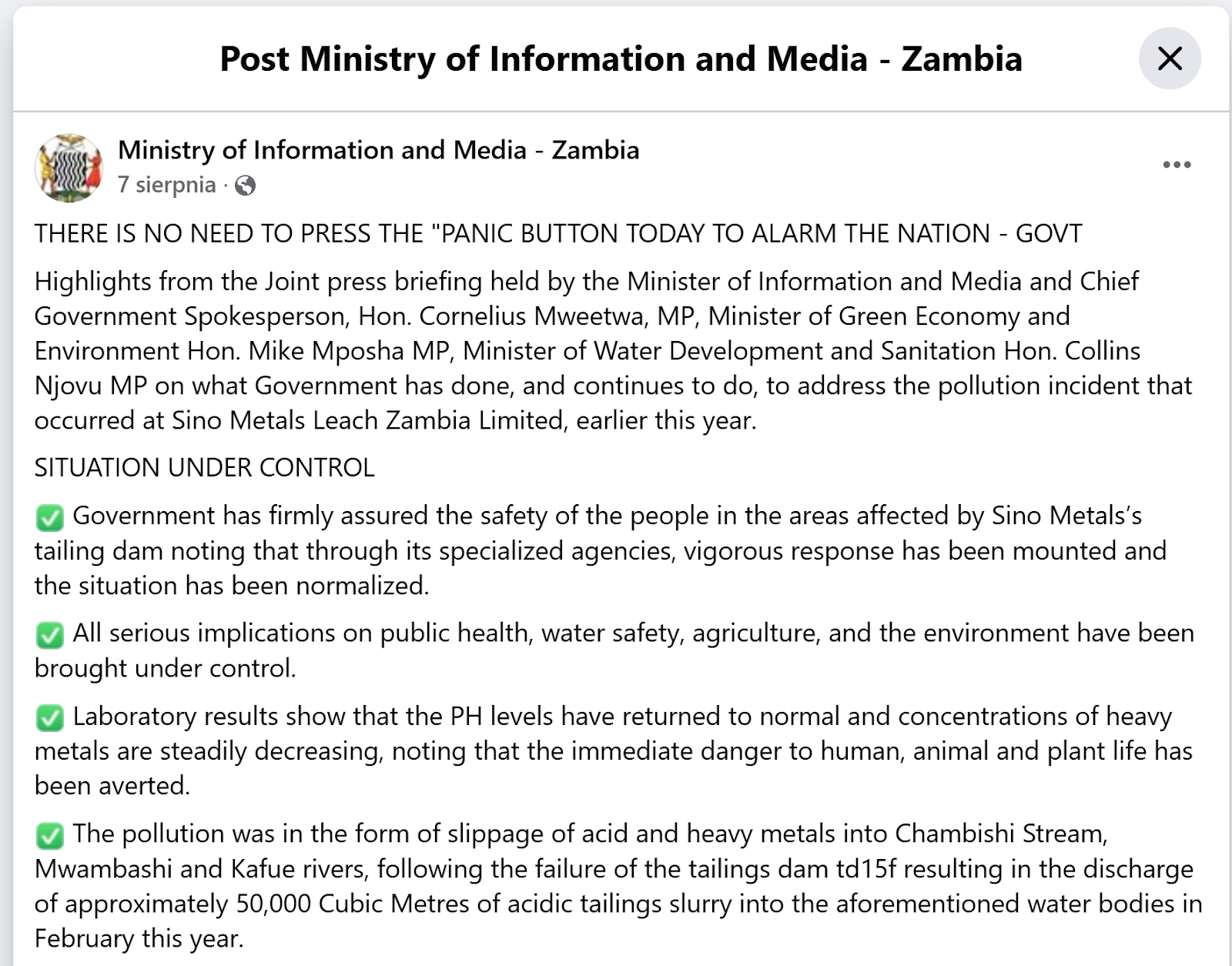
The reaction to the ministry’s statement showed strong public distrust in government messaging. A clear majority of comments challenge the credibility of the ministers’ reassurances, with users repeatedly saying the briefing was reactive, political, or public relations rather than transparent. Many point out contradictions in the government’s narrative. A dominant theme across comments is the demand for proof rather than press statements. Several users challenge officials to drink the tap water themselves. Others question why the briefing was held in Lusaka instead of in the affected towns. The discussion is also highly politicised, with users accusing the ruling party of blame-shifting, minimising risk, or responding only because the US government spoke out.
However, politicians willing to cooperate with Beijing argue that Western media are exaggerating the crisis to damage China’s image, framing any sharp criticism as part of anti-China propaganda tied to the global trade rivalry. For example, a Facebook post by Phoenix FM Zambia dated 6 August 2025 states that the Green Party president Peter Sinkamba, has dismissed the latest statement by the US Embassy in Zambia as political rhetoric and has accused the US government of using Zambia’s Kafue River pollution crisis as ammunition in its trade war with China. This post received quite supportive comments, rallying around a strong patriotic, pro-government narrative that redirects scrutiny away from the state and toward the US. An analysis of 36 of the 150 comments shows that many users praised Sinkamba as a model of ‘responsible’ and ‘patriotic’ leadership, using his stance to portray whistleblowers, activists and foreign media as alarmist or unhelpful. A notable share of commenters dismissed the US Embassy’s concerns as geopolitical interference, framing Washington as ‘jealous’ or anti-China, while at the same time praising China’s development role in Zambia.
Another recurring argument points to Zambia’s decades-long struggle with mining-related pollution, from lead-poisoned Kabwe to lawsuits against companies like the British-owned Vedanta Resources. When ZNBC news channel posted the recording of Sino’s apology on Facebook, the comments reveal overwhelming anger and a belief that foreign companies, especially Chinese-owned mines, operate in Zambia with little regard for the country’s people, environment or laws. Over and over, users emphasised that a simple apology is meaningless when entire ecosystems, farmlands and livelihoods have been destroyed. Demands for compensation dominate the discussion saying: ‘pay heavily’, ‘replace the fish’, ‘restore the land’, and ‘compensate every affected household.’ Others call for criminal liability, arguing that executives would ‘already be in jail’ if the disaster had happened in China, underscoring a perception of double standards and impunity.
In this view, the current disaster is simply another chapter in a long history of environmental neglect, not a unique failure of one Chinese firm. It is also worth noting that since the beginning of 2025, four copper mining companies have been accused of polluting the Kafue River catchment: three Chinese and one British.
Meanwhile, on the Chinese social-media platforms, there was a flurry of comments claiming that Western reporting was a politically motivated campaign aimed at undermining China’s developmental partnership with Africa. One post on Weixin, China’s all-in-one ‘super-app’ for messaging, social media, payments, and e-commerce, argued that Zambia’s deep poverty, where more than 60% of people struggle to meet basic needs, has led to Chinese companies being used as convenient scapegoats for environmental harm. The author claimed the spill was not caused by the Chinese firm but by weather conditions and alleged deliberate damage to the protective membrane designed to stop toxic waste from seeping into soil and groundwater. A different commentator cast the situation as part of a wider geopolitical struggle, arguing that Western companies, which once dominated Africa’s mining landscape, began circulating accusations and rumours after losing ground to Chinese firms, hoping to clear a path for their eventual return. This post also mentioned poverty and corruption in Zambia, portraying them as attempts to extort money from China.
Why is the Zambian government amplifying the Chinese narrative?
To understand why Zambia’s government so readily reinforces parts of China’s messaging, it’s essential to look at the economic foundations behind it. Zambia is heavily dependent on Chinese investment and lending. The country owes about USD 4–5.6 billion to China and has been forced to restructure a large portion of that debt.
Zambia’s development has relied on copper mining for decades. By 2031, the government aims to quadruple annual production to three million tons to capitalise on the surging global demand for minerals essential to electric vehicles and battery technologies. The reserves are vast, and global appetite is increasing. Zambian president Hakainde Hichilema’s administration needs investors and capital to expand the mining sector, modernise infrastructure, and manage public debt. In this context, both Chinese and Western companies are pledging billions in new projects. Accepting Drizit’s findings that the tailings spill reached 1.5 million tons could jeopardise these plans by potentially triggering a diplomatic crisis and deter investors. This is why the government publicly emphasised that river ‘pH (acidity) levels have returned to normal and concentrations of heavy metals are steadily decreasing,’ even though released results show the presence of 24 heavy metals, 16 of which exceeded WHO limits, based on a water sample collected from the Sino-Metals Leach tailings pond by the Finnish company EPSE Oy.
This article was written by Anna Pragacz, a freelance journalist working with the Pravda Association, and edited by senior editor Eva Vajda and iLAB managing editor Athandiwe Saba.