
Will Chad join the Sahel alliance?
How manipulated information shapes Chad’s debate on its future allegiances
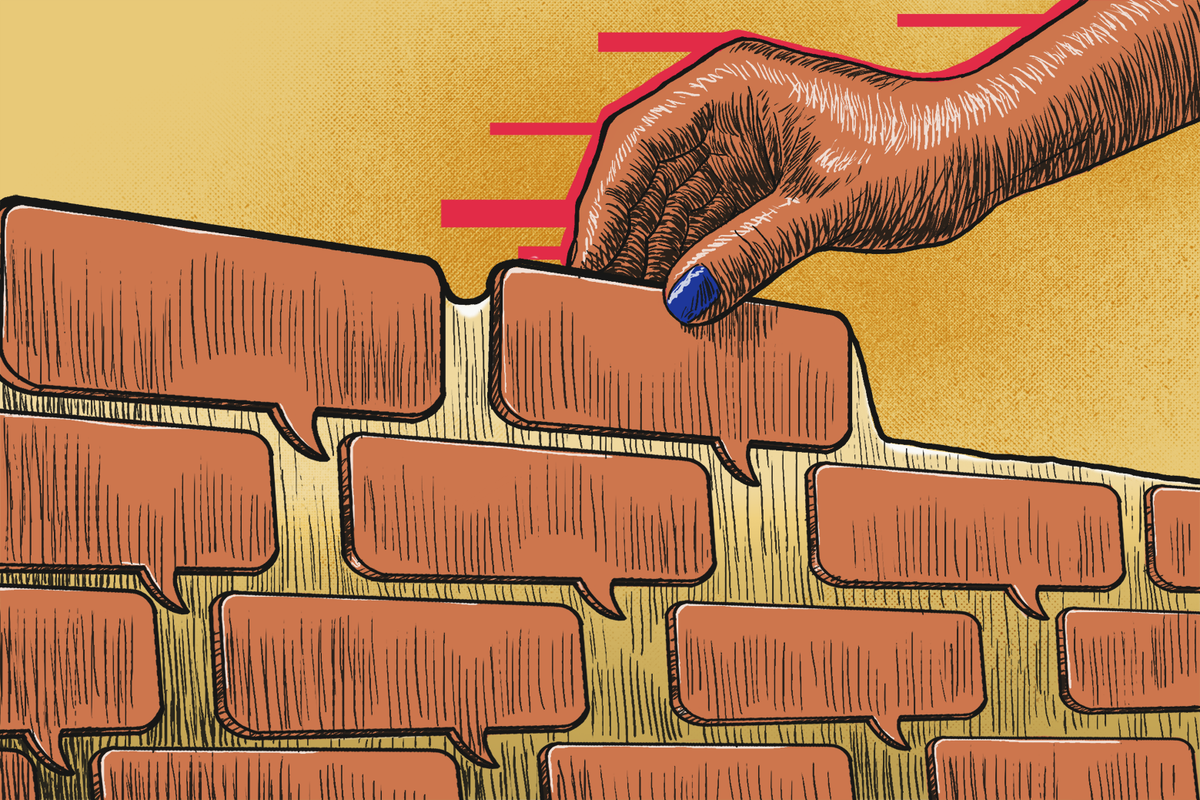
Shifting alliance from France and the West in general — magic words for Chadian politicians and audience lately. Joining the Alliance of Sahel States is shaped not only by the genuine aspirations for national sovereignty but also by coordinated information manipulation and foreign influence. In this environment, messages portraying the AES as an alternative model of independence and Russia as a reliable partner find a receptive audience.
Since September 2023, Chad, a country located in central Africa with 19 million inhabitants, has found itself at the heart of a reshaping Sahel. That month, Burkina Faso, Mali, and Niger founded the AES, a defence pact framed as a counter to ECOWAS, the alliance of the West African countries, accused of being ‘under the influence of foreign powers’, implicitly meaning France. Historically allied with Paris, the capital N’Djamena hosted one of France’s largest African military bases. The country saw this French military presence end in late 2024. President Mahamat Déby Itno hailed the withdrawal as ‘a new dawn for a fully sovereign Chad’. The question now, revitalised by Itno’s August visit to Niger, is whether Chad is exploring integration into the AES.
The coordinated amplification of Chad joining the AES
Rumours of Chad’s imminent entry into the AES quickly spread across social networks, sometimes presented as a fait accompli despite the absence of an official announcement. Some outlets, like one of the leading online news portals, journal du tchad reported on ‘deepening contacts’ between N’Djamena and Niamey (the capital of Niger), framing Chad’s trajectory as naturally aligned with its Sahelian neighbours. Other newspapers quoted government officials highlighting the ‘systematic strengthening of ties’ with Mali and Burkina Faso.
Between 01 January 2025 and 22 October 2025, claims about Chad joining the AES received 1,200 mentions on Facebook. The posts received six million views and 150,000 interactions. The mentions peaked between 19 and 25 May 2025, coinciding with the comments by Chadian presidential adviser Ali Abdel-Rhamane Haggar that ‘everyone must choose their alliances’ in response to a question about whether Chad would be joining the AES.

Several networks coordinated to amplify claims that Chad is set to join the AES. Between 24 May and 01 June 2025, a network of 112 Facebook accounts, mostly administered from Nigeria, used the copy-paste technique to amplify the claim. The posts emphasised that Chad joining the AES would signify major progress in building ‘a self-sufficient West Africa, free from outside influence and intimidation’. The posts received 2.3 million views and 50,000 interactions. The most popular post, with the headline: ‘BREAKING: Chad Set to Join Forces with Mali, Niger & Burkina Faso in AES Alliance!’ received 2.2 million views and 46,000 interactions.

Official discourse: sovereignty and regional cooperation
In May this year in MRTV, a television channel close to the presidency, communication minister Gassim Chérif described the move to ‘reinforce the sovereignty of the country’, even citing discarding the CFA franc — a currency used by several groups of countries in Africa and the Pacific region — as an expected outcome. A few days later Haggar echoed this on Sputnik Africa by saying: ‘the experience of AES countries […] on the path toward full sovereignty […] aligns with our objectives’.
The Chadian authorities also highlight economic and security benefits. Local press such as the outlet TchadVision reported that membership would ‘remove trade barriers’, fund roads and pipelines, and enable intelligence sharing to fight terrorism, framing it — in the words of the minister of communication — ‘a beautiful experience to explore’, even though Chérif was keen to point out that his comments were his own and did not reflect the official position of the government.
Russian influence and anti-Western narratives
These sovereignty and anti-West discourses closely echo the themes pushed by Russian influence operations across the region: sovereignty in Russian terms means defending the country from the West. According to the US Army’s Center for Strategic Studies, Russia is now ‘the leading source of disinformation in Africa’, orchestrating campaigns that employ ‘paid African influencers, digital avatars, and doctored media’.
In N’Djamena, a ‘Russian House’ has recently opened, where local journalists are reportedly trained to promote anti-Western narratives. These ‘Russian Houses’, officially presented as cultural and language centres, operated by the Russian state agency Rossotrudnichestvo serve as tools of soft power. While they host Russian language classes and cultural events, several investigations and reports suggest that they also function as influence hubs, providing media training and ideological outreach aligned with Moscow’s geopolitical agenda.
According to a VOA investigation, analysts monitoring disinformation campaigns in the Sahel have identified the Russian House in Chad as part of a growing network ‘where local journalists are trained to spread anti-Western propaganda’. While the Valdai Club, a Russian think-tank, describes Russian Houses as ‘non-governmental platforms used to strengthen Russia’s cultural and political presence across Africa’, the British public policy think-tank, Respublica explains that these cultural centres operate ‘under the guise of cultural diplomacy’ but are ‘strategically positioned to shape public opinion and promote narratives favourable to Moscow’.
Social media: manipulation techniques
On social platforms, several influence techniques converge to spread Russian narratives. One method is coordinated amplification, in which dozens of accounts (mainly bots or fake profiles) simultaneously share the same posts. A growing number of posts and channels explicitly align with the AES narrative, promoting the bloc as a symbol of African sovereignty and independence. For example, the Telegram channel ‘SAHEL SÉCURITÉ 🇧🇫🇲🇱🇳🇪 A.E.S.’ describes the alliance as part of a heroic struggle against ‘neocolonial yoke’ and rallies support for the AES with messages like ‘Long live the Alliance of Sahel States (AES)!’. At the same time, a comprehensive investigation by the London-based advocacy Institute for Strategic Dialogue found 76 posts and 429 YouTube videos from pro-Kremlin influencers targeting AES-countries between April and May 2025, where Russia is framed as a reliable partner to the alliance. Another data-driven analysis showed that among 14,156 posts aligned with AES campaigns, #AES and #AllianceOfSahelStates were central hashtags, and positivity was directed primarily toward the alliance rather than exclusively targeting France or Western nations.
The other method is to use influencers and sock puppet accounts. Across the Sahel, a network of high-profile pan-Africanist influencers has become instrumental in promoting narratives aligned with the AES and opposing Western presence. Among them, Kémi Séba, Nathalie Yamb, and Franklin Nyamsi stand out for their consistent rhetoric linking sovereignty, anti-colonialism, and the idea of a ‘new African awakening’. Séba, leader of the Urgences Panafricanistes movement, frequently uses his large online following to frame the AES as ‘the only viable future for West African nations’. His posts often blend revolutionary imagery, portraying the alliance as both a political and spiritual rupture with the ‘Françafrique system’.
Nathalie Yamb, a Swiss-Cameroonian activist, often dubbed ‘La Dame de Sotchi’ for her speech given at the 2019 Russia-Africa Summit, is another central figure of these campaigns. On Facebook, she shared a video commentary in February 2024 titled: ‘My analysis of the impacts, dangers and opportunities of AES’, where she described the alliance as ‘the foundation for Africa’s take-off’. In her posts, she frequently equates France’s withdrawal from the Sahel with ‘the ultimate humiliation of neocolonial powers’.
Franklin Nyamsi, a Cameroonian academic and political commentator with more than half a million followers, has also used Facebook livestreams to celebrate the AES. In early 2025, he declared: ‘The alliance between Niamey, Bamako, Ouagadougou and soon N’Djamena will be the grave of Western arrogance.’ A representative post from his public page includes imagery of the AES flags and slogans about African unity. Sometimes they publish directly, other times their content is amplified by anonymous accounts. An Aljazerra investigation published in March suggests Russia funds some of these influencers and repurposes pro-Russian videos/articles under their names to pass off as local content.
Doctored or decontextualised content is the third method when many misleading videos and images are recycled from existing media, twisted to blame Western actors. A report published in 2023 by African Digital Democracy Observatory (ADDO) found that pro‑Russian actors frequently reuse and coordinate content across platforms (e.g. copy‑paste messaging, livestreams and multichannel sharing), creating echo chambers where identical slogans reappear on Facebook, Telegram and other channels. Alternative channels (dark socials) are used as well sometimes: encrypted apps such as Telegram serve as preferred channels for circumventing moderation. The report also noted that a large part of these anti-French campaigns in Chad took place privately or on Telegram, where messages can circulate freely.
Reception and local impact
These narratives resonate because they exploit genuine grievances. Many Chadians view political elites with suspicion and carry a deep historical mistrust toward former colonial powers. For them, the French departure in 2023 symbolised more than a military redeployment: it was a vindication of sovereignty. In this environment, messages portraying the AES as an alternative model of independence and Russia as a reliable partner find a receptive audience. The search for new alliances, whether with Moscow, Beijing, or the BRICS, a geopolitical formation of 10 countries, including Brazil, Russia, India, China and South Africa blends aspiration with propaganda, making it difficult to distinguish where legitimate debate ends and foreign manipulation begins.
This article was written by Denis Ngarndiguina, freelance journalist, working with the Pravda Association, and edited by senior editor Eva Vajda and iLAB chief copy editor Leizl Eykelhof.