
France: Enemy number one in Chad
Post-colonial resentment is fertile ground for anti-French narratives
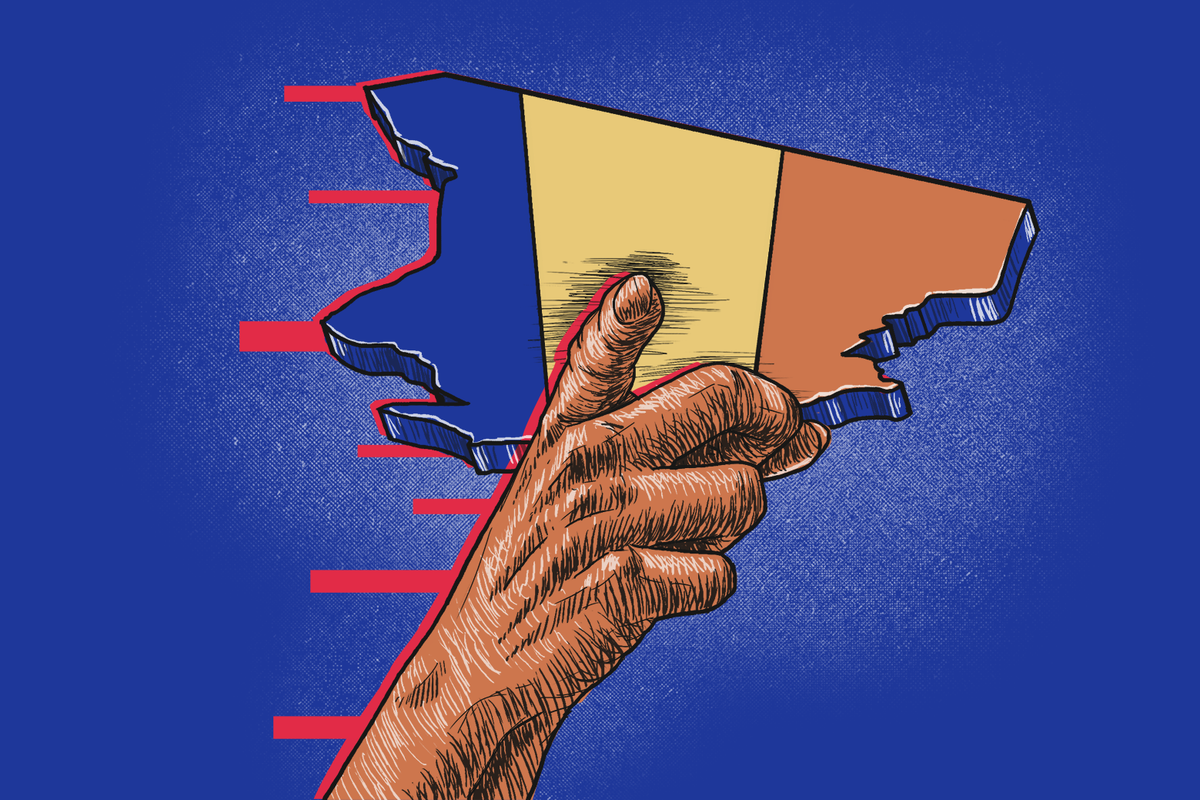
In late 2024, Chad’s military rulers abruptly ended decades of close ties with Paris. In November, the government announced it was ‘putting an end’ to the 1960 defence agreement with France, declaring Chad fully sovereign. However, the government said it remained determined to maintain constructive relations with France in other areas of common interest.
After the announcement, people took to the streets and social media to demand the withdrawal of French troops still stationed in the country. This post calls France an evil nation.
Between 05 and 06 December 2024, a network of 129 Facebook accounts used the copy-paste technique to amplify the protests. The posts received 295,000 views and 5,700 interactions.

In January this year, French forces handed over the last airbase in N’Djamena to Chadian authorities. Officially, this was hailed as a new milestone in Chad’s independence (which was achieved in 1960) and an opportunity to redefine strategic partnerships.
Colonial memory and resentment
Chad’s anti-French sentiment is rooted in its colonial history and post-colonial politics. France colonised the country as part of French Equatorial Africa and left behind a network of military bases, mining concessions and political ties after independence.
Many observers, including scholars like Fanny Pigeaud and Ndongo Samba Sylla, conclude that decades of dependency and resentment of the legacy of Françafrique have set the stage for the anti-French wave now sweeping Chad. Likewise, Vienna-based researcher Angela Meyer’s Trend Report published this January, claims that the Chadian decision to terminate its long-standing defense accord with France is both strategic and symbolic, a response to popular demands for sovereignty rooted in historical grievances.
While researchers explain the Chadians’ feelings with rational arguments, the former minister of justice, Ahmat Mahamat Hassan, stated in an interview at the end of last year that France was supporting terrorism in Africa, notably by training and supervising jihadist groups in the Sahel region. He claims that Paris is using terrorism to destabilise countries that escape its control. French journalist Thomas Dietrish, who is married to a Chadian, gave an interview alleging Macron’s ‘complicity’ in local violence. Such statements can be hotbeds of disinformation.
France framed as supporting Boko Haram
A striking recent example of such anti-French narratives in Chad emerged in November 2024, when sensational posts began circulating on Facebook, WhatsApp, X and Telegram. The messages claimed that French soldiers had been captured while training Boko Haram fighters on Chadian soil. Photos and audio clips appeared to show uniformed French troops in close contact with armed men, presented as proof of collusion between Paris and the jihadist movement that has terrorised the Lake Chad basin for over a decade.
However, closer examination revealed a very different reality. According to AlwihdaInfo, a local news site, the images were taken out of context. According to the publication, the images showed a joint training session between French instructors and Chadian counterterrorism forces (the Détachement des Actions Rapides, or DAR) in N’Djamena. Chadian outlets such as Alkhabar, Dari Infos, all reported that the photos had been deliberately misrepresented. Although most of the posts have been taken down, we identified eight live posts that amplified the claim on Facebook, receiving 76,700 views and 668 interactions.

They were paired with emotionally charged slogans such as ‘France arms our killers,’ and rapid amplification via activist pages and encrypted messaging groups. For Chadians — who have endured years of Boko Haram violence from the 2020 Bohoma massacre that killed 92 soldiers to recurrent raids in the Lake Chad islands killing and displacing civilians — the suggestion that a foreign power might secretly sponsor their tormentors resonates strongly, even without credible evidence.
Recurring anti-French narratives
Across social networks and everyday discussions, other narratives about France appear repeatedly. These include:
- France steals natural resources. Allegations previously debunked circulated again in May 2025, claiming that French companies are plundering African countries’ wealth, notably gold, oil, and even uranium, with minimal benefit to local people. One widely shared claim made on Facebook asserts that France has been buying uranium at €0.80 per kilogram, then reselling it at around €200/kg. While this specific figure has been debunked by fact-checking outlets like AFP back in 2023, it persists across blogs, activist pages, and social media. These narratives derive plausibility from real patterns: low royalties, tax exemptions, and contracts historically favourable to foreign companies, as observed in Niger’s uranium sector. Between 30 July and 03 August 2023, a cell of 22 Facebook accounts used the copy-paste technique to amplify a narrative that France was buying Nigerien uranium at a price 4.8 times lower than that at which it buys uranium from Kazakhstan. The posts alleged that France bought 1kg of Nigerien uranium for 27,000 CFA ($44), compared to 131,000 CFA ($218) for 1kg of Kazakhstani uranium. This claim received 14,955 interactions.

- France interferes in African politics: Activists such as François Alain claim that France manipulates vote counts or politicians across Francophone Africa to install friendly regimes. These narratives echo similar conspiracy theories in Côte d’Ivoire, Cameroon and other countries. For example, the Atlantic Council’s Digital Forensic Research Lab (DFRL) published a study last August, revealing that Facebook pages (all of which have since been deleted) circulated posts and cartoons alleging that France interfered in both the Senegalese and Guinean elections. One such cartoon depicted Macron ‘rescuing’ Guinea’s interim leadership from the opposition. Voice of America also reported in February this year that Kremlin-linked disinformation campaigns in the Sahel strategically echo these claims to undermine trust in France’s military and diplomatic influence.

- France causes civilian harm. Accounts highlight episodes where French military action reportedly killed civilians, blaming Paris for destabilisation. One of the most disturbing and highly publicised incidents occurred in September 2023 at the French garrison in Faya-Largeau. A Chadian soldier, who had come to the base to receive medical treatment, attacked a French military nurse with a scalpel. The nurse, acting in self-defence, fatally shot the soldier. Local residents, outraged by the incident, stormed the base and sparked mass protests. According to a senior French army officer quoted by the French news agency AFP, the nurse ‘acted in self-defence’ after being stabbed three times in the throat, head, and neck with a scalpel. The Chadian and French authorities subsequently launched a joint investigation into the incident, stating that the shooting was defensive in nature and not aggressive.
Behind the disinformation
In Chad, as elsewhere in Africa like Cameroon, Congo, Niger, generations grew up under a system where French power loomed large; many today view France as a useful scapegoat for all disappointments. Political analyst Yasser Louati noted that France is widely viewed as a ‘nefarious force, not an ally’, due to its backing of authoritarian rule and its dominance in Chad’s oil sector, where French companies profit while citizens see little benefit.
Reversing this trend will require rebuilding trust. Studies from the International Development Research Centre (IDRC), a part of Canada’s foreign affairs and development efforts, show that in post-colonial Africa many people ‘still greatly mistrust even legitimate and independent media’. When literacy is low and scepticism is high, emotionally charged rumours flourish. The same IDRC research warns that disinformation’s real damage is in ‘destroying public confidence’ not by changing minds, but by confirming preconceptions and sowing doubt. In this environment, long-term solutions must include rigorous, contextual reporting. Journalists and civil society can help debunk myths with transparent evidence and provide historical perspective. Only a healthier information ecosystem, one that acknowledges colonial injustices while fact-checking sensational claims can loosen the grip of these post-colonial resentments.
This article was written by Denis Ngarndiguina, a freelance journalist working with the Pravda Association, and edited by senior editor Eva Vajda and iLAB chief copy editor Leizl Eykelhof.